
Checkpoints: Regeneration Row
In the Arizona desert, the Air Force's past never dies
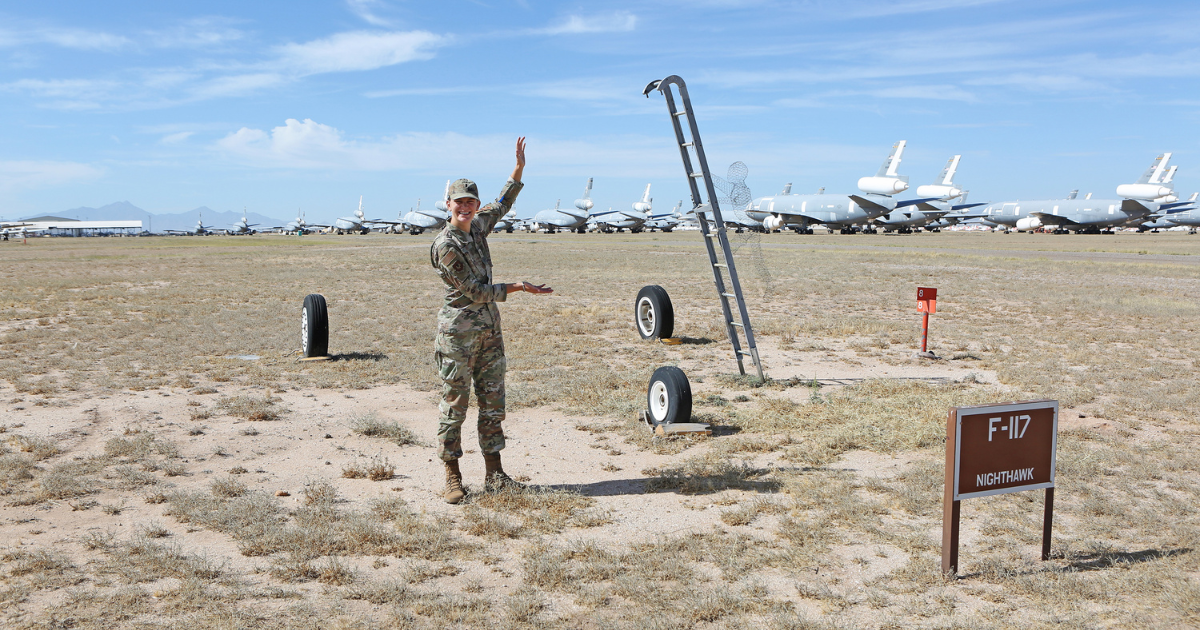
The ladder climbs about 8 feet before it ends — at nothing. No cockpit. No canopy. No aircraft at all. Just open desert air and a placard identifying what is not there. The F-117 stealth fighter parked on Celebrity Row at Davis- Monthan Air Force Base in Tucson, Arizona, lives up to its reputation. You cannot see it because it is not there. Only three tires betray its presence, sitting on the desert floor like a punch line to a joke.
It is, 1st Lt. Jenna Adams ’22 will tell you, just one of the reasons she loves coming to work.
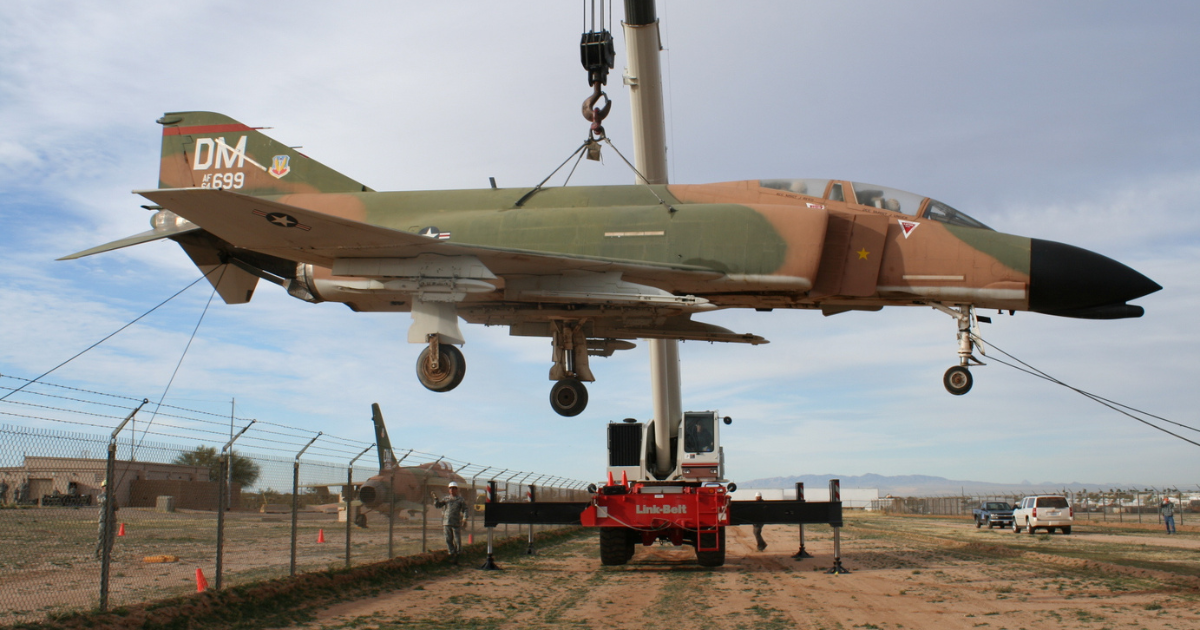
During her workday, Adams drives past Celebrity Row, a display showing one of each aircraft type stored on the property where aluminum skins gleam under the Southwestern sun — an F-15 Eagle, F-16 Fighting Falcon, A-10 Warthog and B-52 Stratofortress. Plus, an F-4C Phantom II with a U.S. Air Force Academy connection. On April 23, 1966, Capt. Robert Blake ’59, piloting that very F-4C, tail number 64-0699, became the first USAFA graduate to shoot down a MiG during the Vietnam War when an AIM-7 Sparrow shredded a MiG-17.
“It is just incredible and crazy to see all these aircraft that have flown so many different missions, shot down MiGs. And I get to work here,” Adams says. “It is honestly a blessing.”
Adams, a maintenance officer, serves as a flight commander at the 309th Aerospace Maintenance and Regeneration Group — known throughout the Air Force simply as AMARG, and known to nearly everyone else as the Boneyard.
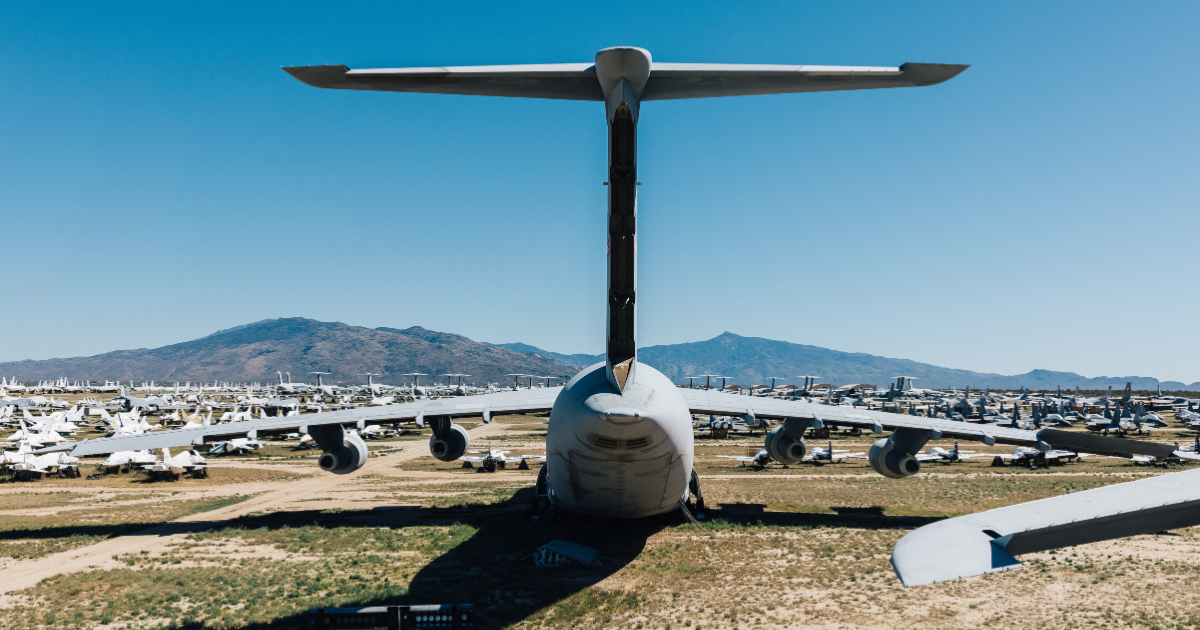
Spread across 2,600 acres on the southeast side of Davis-Monthan, AMARG stores approximately 3,500 aircraft and 6,700 aircraft engines for all five branches of the U.S. military, government agencies including NASA and the Smithsonian, and allied nations.
The desert air and the rock-hard caliche soil — impervious to the weight of even the largest aircraft without concrete or tarmac — made this stretch of southern Arizona the logical (and eventually the congressionally mandated) choice for the nation’s sole military aircraft storage facility.
It is what the group calls America’s National Airpower Reservoir. For Adams and the largely civilian workforce, it is far more than a storage yard.
Nothing about the assignment was what she expected. Three years working C-17s at Charleston Air Force Base, South Carolina, had given her a maintainer’s instinct for the supply chain — the part you need, the answer you get, the gap between them. AMARG closed that gap. Here, she could see the other side of every requisition that had ever come back denied.
FIVE MISSIONS, ONE DESERT
AMARG operates under five mission elements that together make the facility unlike anything else in the Air Force.
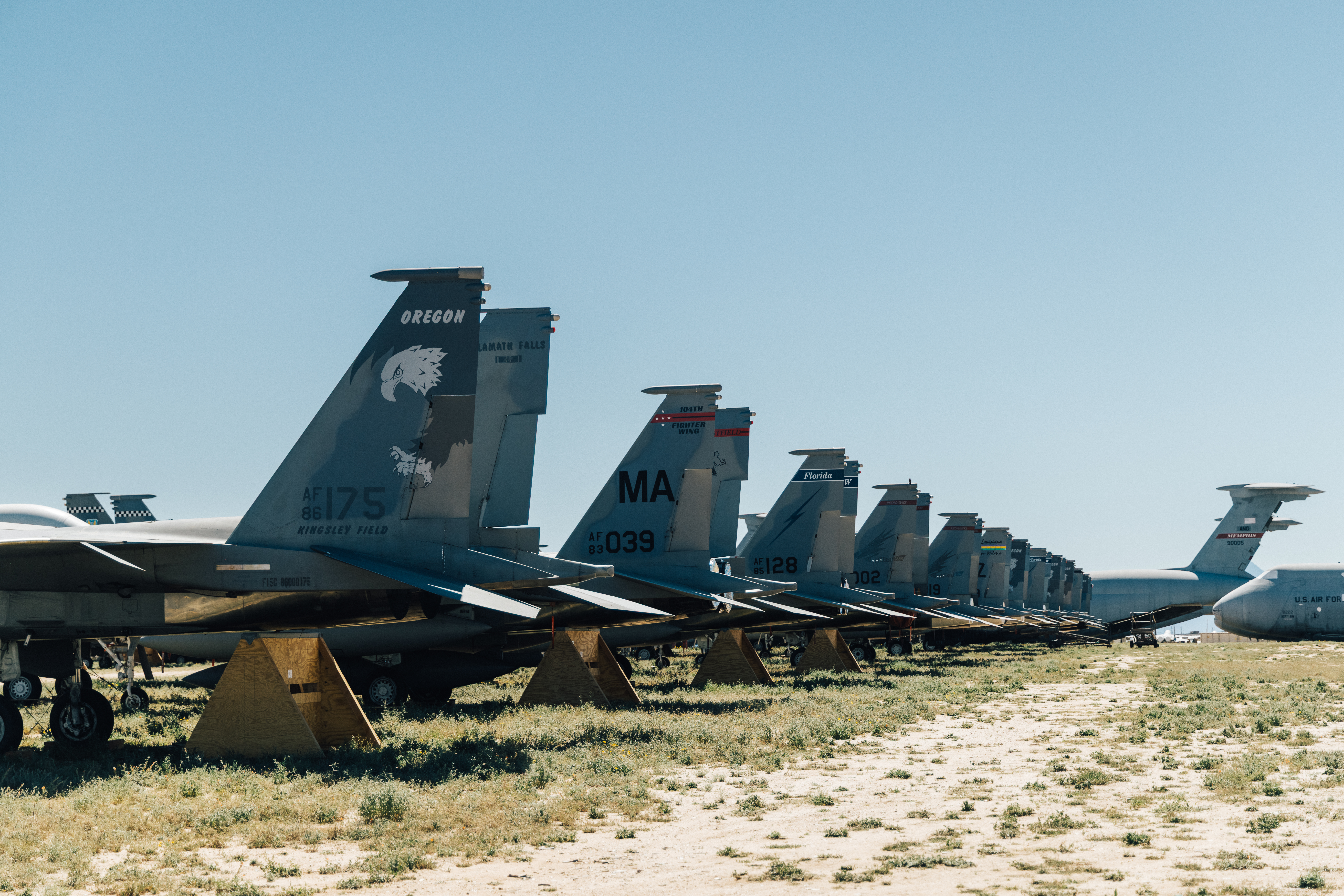
Preservation and storage are the most visible elements of AMARG's work — those thousands of aircraft parked in precise rows across the desert floor, their canopies waxed, their engine openings sealed with aluminized canvas, their skins coated in a white strippable spray sealant that keeps interior temperatures within a range safe for avionics and electronics.
When an aircraft arrives, its first stop is the flush farm. Fuel is drained and replaced with a lightweight preservative oil that burns through the engine and fuel system plumbing. Next, the aircraft moves to the wash rack, where it is cleaned of grit and insects and is prepared for long-term storage.
Aircraft enter storage under one of several classifications. Type 1000 aircraft are inviolate — no parts removed — and are pulled from the desert every four years to have their preservation renewed, their engines run and their sealant reapplied before returning to storage. These aircraft, which include F-16s, A-10s and B-52s, may return to service in some fashion.
Type 1500 aircraft receive the same protection but without the quadrennial preservation. Both categories are candidates for regeneration.
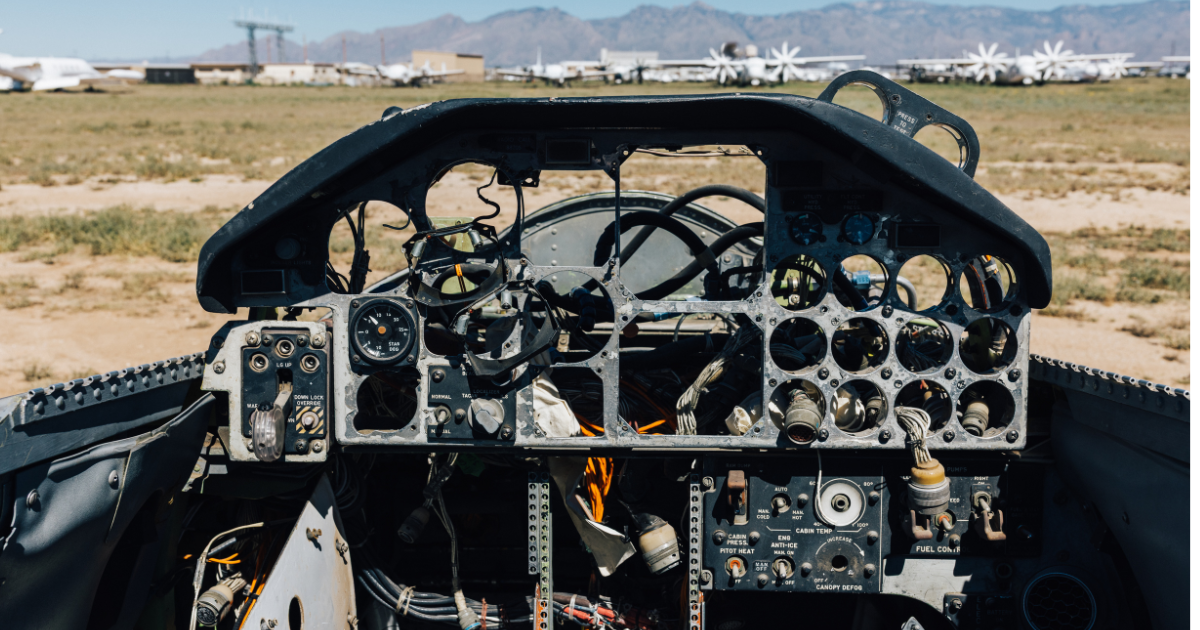
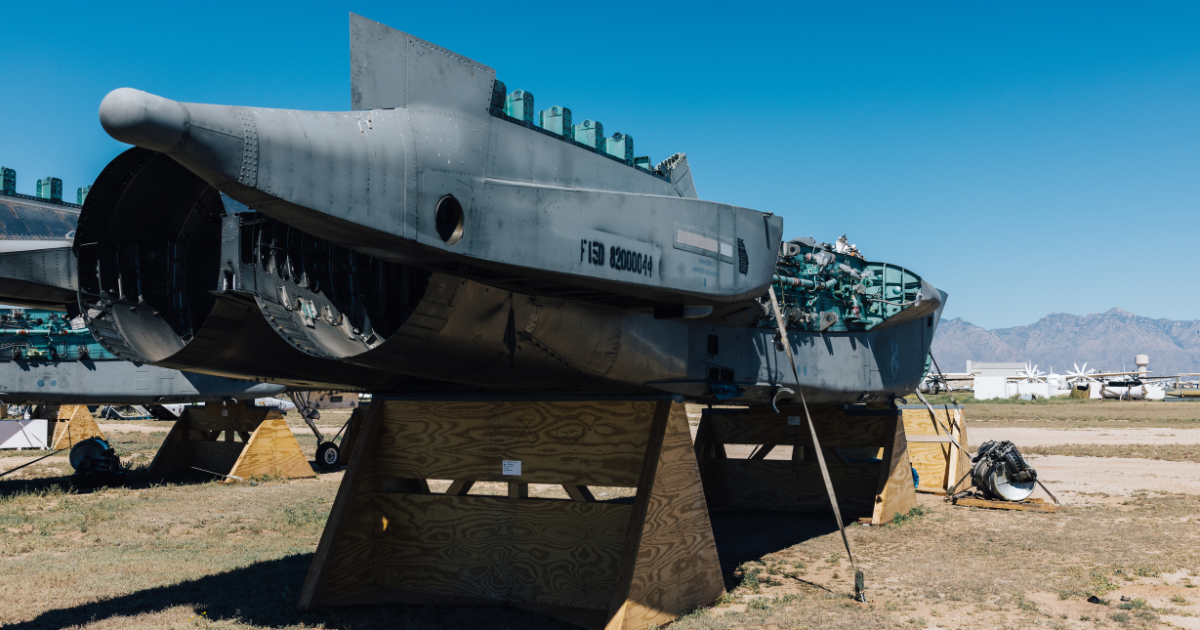
Type 2000 and 4000 aircraft are older and used as reclamation assets, designated as parts sources for the program offices; 4000 storage aircraft are, open to the broader supply system.
The regeneration mission — returning stored aircraft to flying service — is among the most dramatic work AMARG performs.
In recent years, the group regenerated B-1 Lancer bombers back into the active inventory.
A C-130 now on the facility’s engine run pad is being prepared for the Colombian Aerospace Force under the Foreign Military Sales program. Its systems have been updated and its airworthiness restored after years in the desert.
Parts reclamation is, in raw financial terms, AMARG’s most consequential mission. Last year, AMARG technicians reclaimed approximately 10,600 aircraft parts valued at roughly $500 million — half a billion dollars returned to the supply system by a workforce that treats each stored aircraft as an airplane-shaped parts warehouse.
“AMARG is often the only source of spare parts for older aircraft,” says Rob Raine, AMARG’s public affairs manager. This year, the group is on pace to exceed that figure, approaching $600 million in reclaimed components. High-priority parts can leave the facility within 24 hours of an order being placed. For parts not needed urgently, AMARG works with customers to schedule reclamation so that no single requirement crowds out another.
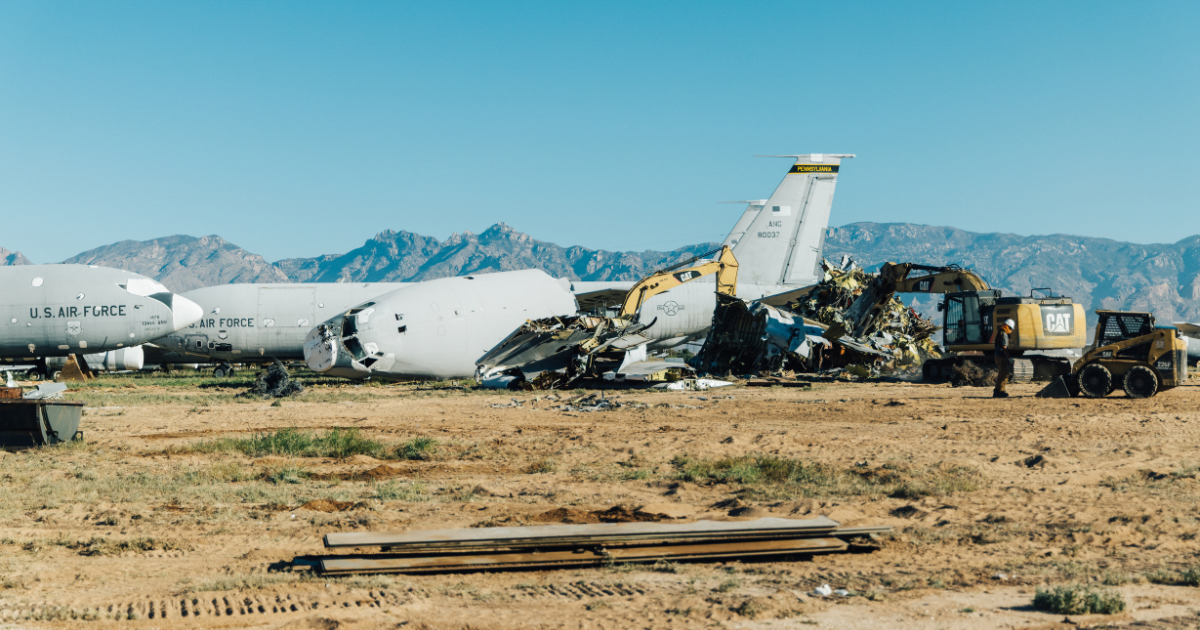
The fourth mission, aircraft disposal preparation, involves cleaning aircraft of hazardous materials and classified components before a contractor arrives to shred them — their aluminum recycled, ultimately, into automobile parts.
Nothing at AMARG goes to waste. Not the aircraft, not the engines and not the 271,000 line items of aircraft production special tooling — the jigs, dies, forms and assembly fixtures stored in wooden boxes and tension fabric shelters across the eastern reaches of the property. When a manufacturer needs to remanufacture a component no longer available through the supply system, that tooling can mean the difference between an available part and a dead end.
The fifth mission is depot-level maintenance. That is where Adams works.
PLANNING ACROSS YEARS
Adams’ full title — flight chief, 576th Aerospace Maintenance and Regeneration Squadron Production Support Flight, 309th Aerospace Maintenance and Regeneration Group — reflects the scope of what she manages.
In practical terms, Adams oversees the strategic and tactical planning and scheduling for all aircraft that pass through AMARG’s depot-level maintenance program.
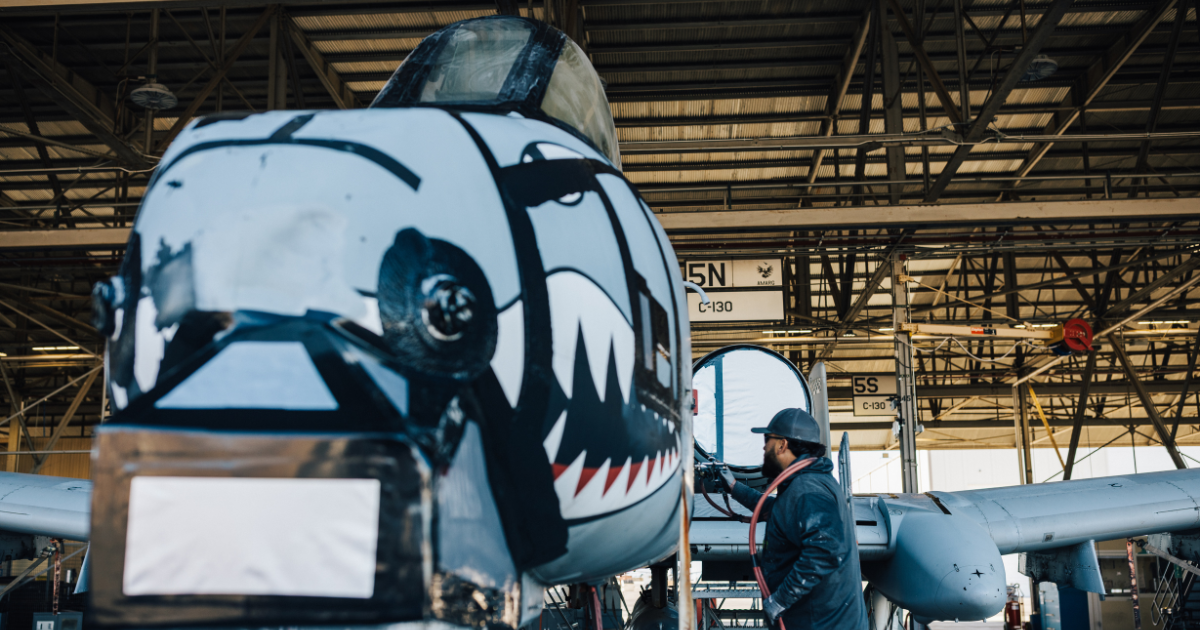
That work happens inside a maintenance shelter originally constructed as nose docks for B-47 bombers in Wichita, Kansas, that were disassembled, shipped to Tucson, and rebuilt on site in 1961.
Today, the shelter handles F-16s undergoing two distinct depot programs: Program Structural Sustainment and Repair, which addresses airframe longevity after a major structural overhaul, and Post Block Repair, which modernizes the aircraft’s systems and maintains its lethality in a high-fourth-generation, low-fifth-generation threat environment.
“From a flight line maintenance perspective, you go in and you’re writing out your cards as you’re finding troubleshooting issues,” Adams says. “We have a lot more that goes into that at a depot level. So, you’ve got a whole different funding line that you have to keep account of. When the guys out here find something they need to troubleshoot, that then comes to my guys. Our team works to build those cards and build out the entire schedule of the aircraft that comes through. That’s years in advance that I’m planning — different F-16s coming through, different foreign military sales, figuring out where I have capacity to work those into the overall schedule.”
At the tactical level, Adams manages concurrent maintenance — three modifications that cannot all happen simultaneously, resources that must be sequenced, budgets that must balance.
The F-16 is the most numerous aircraft at AMARG, with approximately 350 on site. The work Adams plans keeps those jets — and the pilots who fly them — in the fight.
“I have friends who are F-16 pilots,” she says, “and so being able to contribute to the fight that they’re working on has been pretty awesome. And then also making sure that the jets they are flying are safe — that’s something that I really am thankful for, as far as being in maintenance. Being able to see how much time and energy goes into making sure our pilots — our tip of the spear — are safe and that they have working aircraft that help them maintain lethality when it comes to the war fight.”
LEADING UP THE EXPERIENCE LADDER
Adams arrived last fall knowing little about what she was walking into.
Of AMARG’s roughly 700 employees, four wear a uniform. Adams is one of three commissioned officers. One enlisted airman rounds out the uniformed complement. Everyone else is a Department of the Air Force civilian — many of them veterans who served in the Air Force, Army, Navy and Marine Corps and returned to the defense industrial base. Some of them have more than 20 years of experience at AMARG alone.
“I’m working with people who have been in the Air Force longer than I’ve been alive,” Adams says. “Being able to see that as a leader, see how much impact our civilian counterparts give to the Air Force, is incredible and, honestly, humbling.”
Leading that workforce has required a different kind of leadership than she learned at the Academy or at Charleston.
“With the civilian workforce, there’s a lot of understanding there, and there’s a mutual respect regardless of who you’re working with,” she says. “And I think the most that I’ve learned here is how much I don’t know and how much I can continue to know about the Air Force.”
Col. Redahlia Person, AMARG’s commander, sees the assignment as a formative opportunity for any young officer. “As a young leader, it’s a great opportunity — and as an experienced leader as well — to guide a predominantly all-civilian workforce that contributes so largely to the defense industrial base,” Col. Person says. “I think that’s unique and really a neat experience to have as a uniformed leader.”
A FAMILY OF LONG BLUES
Adams did not arrive at the Academy without context. Her older sister, Jessica, graduated in 2014 and introduced her to what the institution could offer. Her younger sister, Emily, graduated in May with the Class of 2026. Her younger brother will graduate with the Class of 2029. Four of six siblings have worn the cadet uniform. “Seeing what my older sister got to do put [the Academy] on my radar,” Adams says. “I said, why not apply? I would like to be part of something bigger than myself. And so, I joined and fell in love with the Air Force overall.” She found her way to aircraft maintenance because it put her alongside the most people — and, as it turned out, the most history.
BACK INTO THE FIGHT
One of the sharpest feelings Adams describes is the moment a regenerated aircraft lifts off.
The C-130 being prepared for Colombia represents the full arc of what AMARG does.
Years ago, Colombian representatives toured the facility, identified aircraft they wanted and initiated a foreign military sales process that wound through the U.S. Embassy, the International Affairs Office, Congress and the State Department before it ever reached AMARG’s flight line.
By the time the approval reaches Adams and her colleagues, the diplomacy is done.
The work that remains is mechanical, logistical and deeply technical — updating systems, planning concurrent modifications, managing the budget line by line.
“Some of these jets are pretty old,” Adams says. “A lot of them fire up, but when you add all the modifications, that can lead to other complications. Some of these jets, as any maintainer knows, will give a little bit of fight back. And sometimes they don’t want to fly if they haven’t been flying for a while. But it really is incredible to see how much of an impact we’re able to have getting the F-16 modded out so they can go back into the warfighter reservoir.”
The moment the aircraft climbs away from Davis-Monthan, Adams says, is a mix of satisfaction and relief. It is also a reminder of what the Boneyard is not.
“There is a little bit of sadness when you see a jet torn up,” she says, “but there’s also beauty in that — that that’s getting recycled and put back into the fight.”
For a USAFA graduate still early in her career, AMARG has offered something Adams did not expect: a wide-angle view of the Air Force she serves.
She can see how a single part, reclaimed from an aircraft parked in the Arizona sun, reaches a broken jet at a base halfway around the world.
She can see how the work of 700 civilians sustains a fighting force that never sees them.
“You get to realize how small you are as a piece of the Air Force,” Adams says, “and it helps you see the bigger picture — but also have a gratitude for the bigger picture, as far as how much work goes into pulling one part to get it to another aircraft, how much work goes into making sure our pilots are safe out there, how much work every single maintainer puts in. The blood, sweat and tears.”
Editor’s note: 1st Lt. Adams is now Capt. Adams and director of operations for the 309th Aerospace Maintenance and Regeneration Group’s business office.