
Checkpoints: Hemisphere on Alert
Inside the Air Force command that went from "sleepy" to center stage overnight
When airmen cleared away decades of jungle growth from an old building at the former Roosevelt Roads Naval Station in Puerto Rico, they found something from years past: old squadron patches, mostly Navy and Marine Corps, still clinging to the walls after more than two decades of silence.
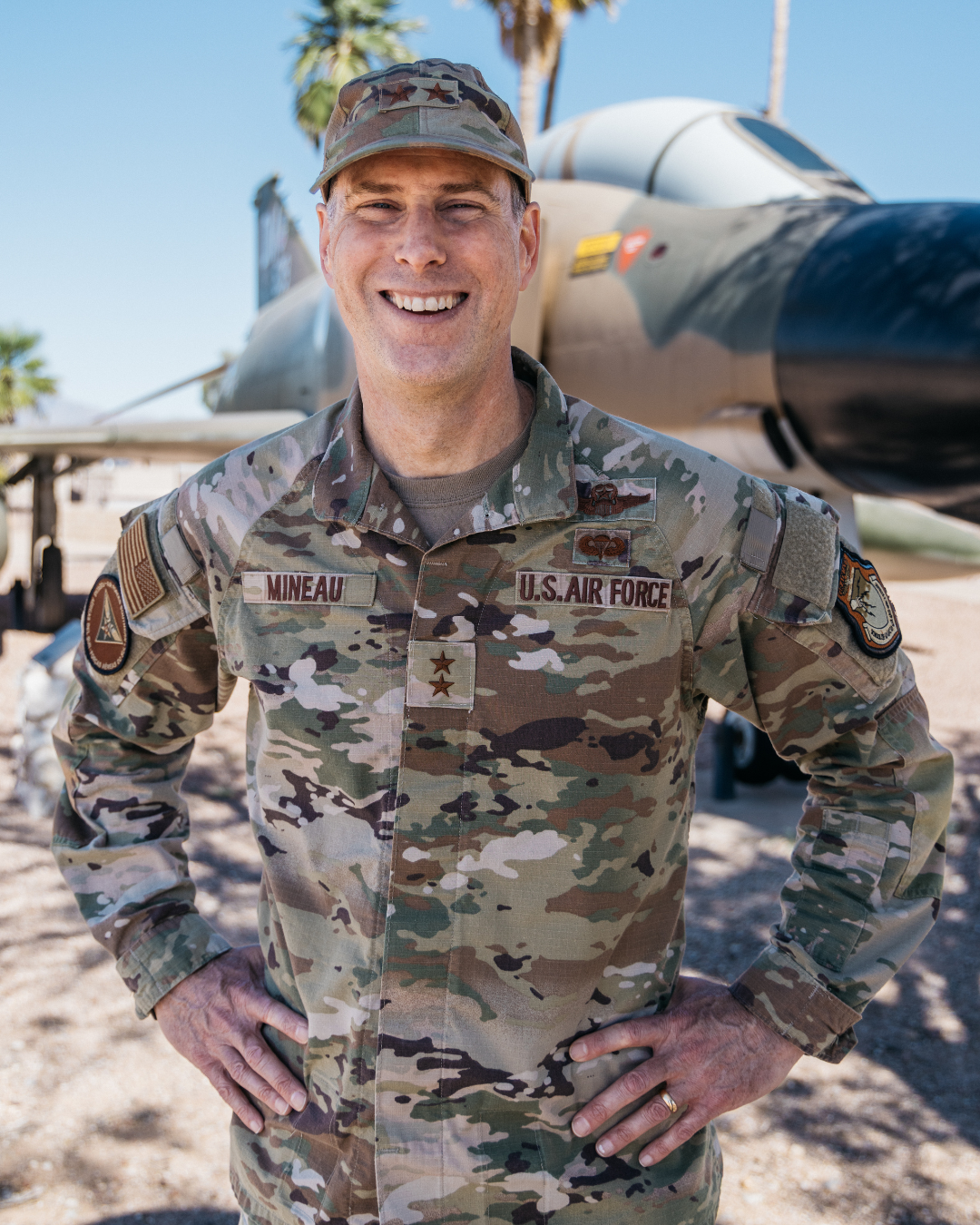
“It was fascinating,” says Maj. Gen. David Mineau ’94, Air Forces Southern commander. “The aviation history was still there.”
Roosevelt Roads had been closed to military operations since 2004.
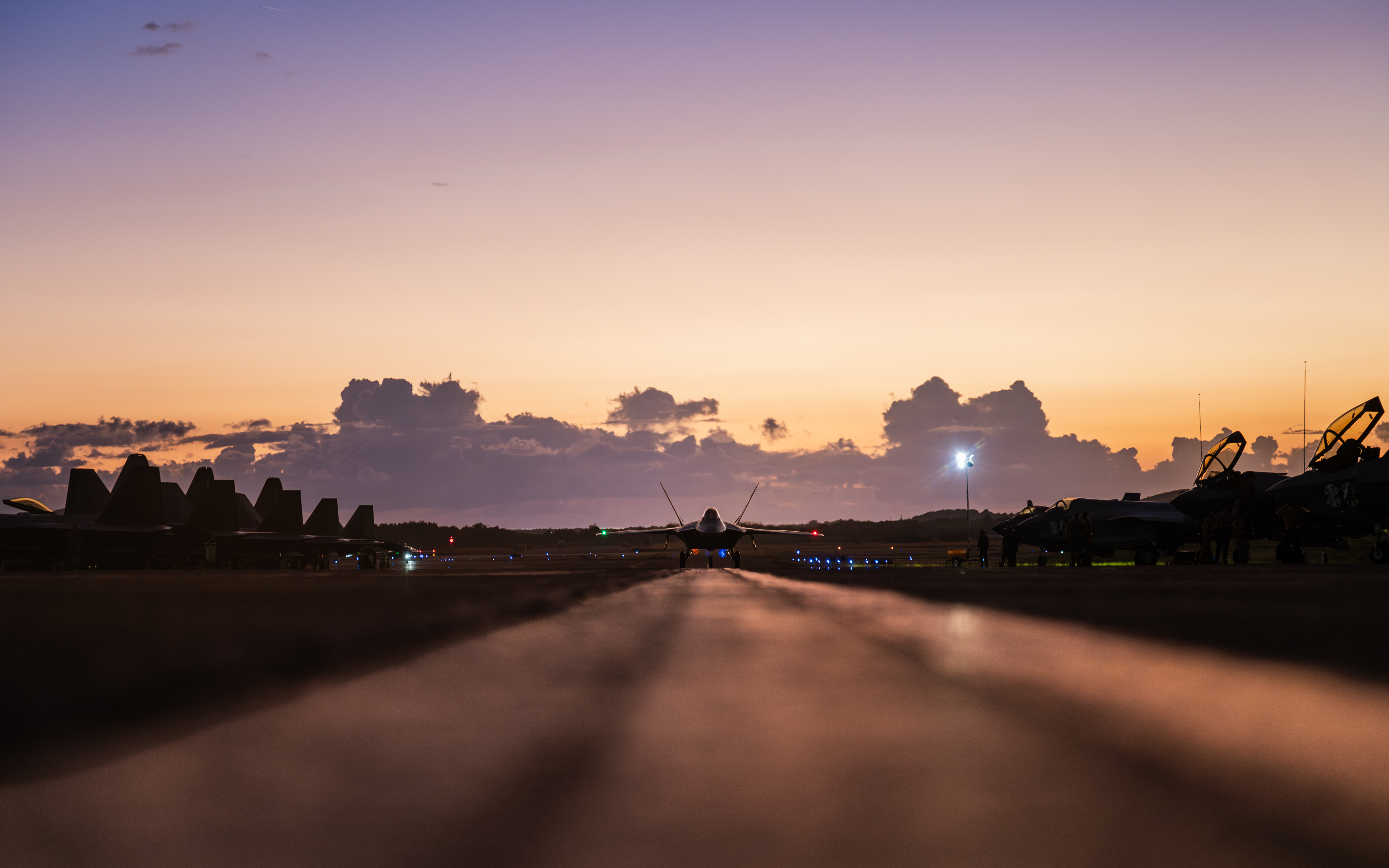
Last year, it reopened — along with bases across Puerto Rico, the Virgin Islands and partner nations in the Caribbean — to support what the Pentagon has described as the largest U.S. military presence in the Western Hemisphere since the Cuban missile crisis.
On a single night this past January, more than 150 aircraft launched from 20 locations spread across the hemisphere as part of Operation Absolute Resolve — a joint mission aimed at capturing Venezuelan President Nicolás Maduro and his wife, Cilia Flores.
One of the key commands behind it was Air Forces Southern — headquartered at Davis-Monthan Air Force Base in Tucson, Arizona — home to many Air Force Academy graduates who are helping reshape what was, until recently, one of the quieter corners of the American military.
"When I first got here in July 2024, AFSOUTH was still a very sleepy place,” says 1st Lt. Amir Walker ’22, deputy chief of ISR operations at the 612th AOC. “We didn’t have a lot of assets at all.”
That changed fast.
A COMMAND REBORN
AFSOUTH’s mission is enormous on paper — air, space and cyberspace operations across 31 nations covering a sixth of the world’s land mass, from the tip of South America to America’s southern border. It is the Air Force component to U.S. Southern Command.
For years, AFSOUTH operated in the shadow of U.S. Central Command and U.S. Indo-Pacific Command, the theaters that drew the biggest headlines and the most resources.
The current national security environment changed that calculus.
“The national defense strategy has three tasks for the Western Hemisphere,” Gen. Mineau explains. “First, degrading the narcoterrorists — the extremely violent drug cartels bringing poison into the United States and wreaking havoc across the hemisphere. Second, ensuring the United States maintains access to key terrain, like the Panama Canal. Third, ensuring that nonhemispheric competitors — China, Russia, Iran — do not gain a foothold here.”
All three converged in this area of responsibility at once.
Counter-drug strikes under Operation Southern Spear led into the Venezuela mission. Partnerships built over years were suddenly leveraged to allow aircraft to land and refuel. Intelligence assets that had covered a quiet theater began running around the clock.
Gen. Mineau — a USAFA distinguished graduate who grew up an Air Force dependent in Europe — arrived at AFSOUTH after serving as deputy commander of Ninth Air Force, overseeing a 21-nation area of responsibility in Central and Southwest Asia, where he learned to operate inside fractious coalitions.
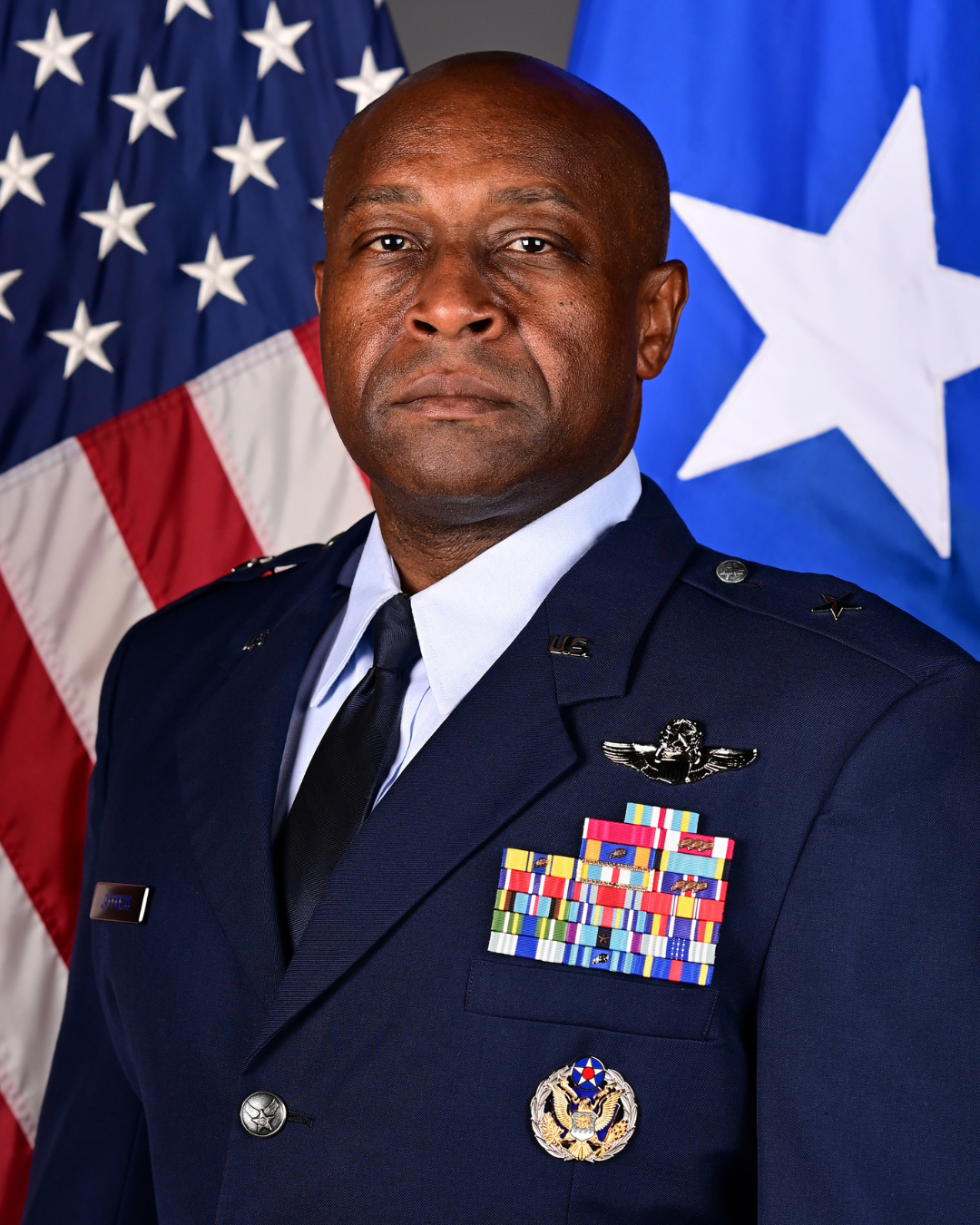
His deputy, Brig. Gen. Henry Jeffress III ’98, brought a different kind of preparation. A former F-16 pilot who commanded the legendary Wolf Pack at Kunsan Air Base in South Korea and served as senior executive officer to the Air Force chief of staff, Gen. Jeffress most recently led Air Force Futures and Concepts at the Pentagon — thinking about the wars of tomorrow — before arriving at AFSOUTH to help fight the ones happening today.
“The air component must gain awareness, maintain it, understand it and utilize that information to gain decision advantage in order to deliver combined effects on the objective,” Gen. Jeffress says. “There is always room to improve, especially in our ever-changing world.”
Gen. Mineau says the lessons he learned in the Middle East proved directly useful at AFSOUTH.
“How do you partner and collaborate with regional partners, some of whom are close allies and some of whom are on the fence?” Gen. Mineau asks. “I lived through that in AFCENT. I knew what right looked like, and that was extremely helpful.”
The transition from a theater built around security cooperation to one prosecuting kinetic operations against a sitting head of state — all while managing coalition relationships and a command never built for round-the-clock operations — demanded exactly the kind of experience he’d accumulated in the Middle East.
SPRINT MODE
AFSOUTH was not designed for what it was asked to do.
“Our air operations center isn’t even manned for 24/7 operations,” Gen. Mineau says. “We used to advertise that we could surge for about 14 days before we needed augmentation. I think we went four or five weeks before we got augmentation.”
The command sprinted through planning cycles, secured aircraft and personnel through the global force management process, and stood up operating locations across the Caribbean.
For Operation Absolute Resolve alone, AFSOUTH managed roughly 2,800 airmen and about 80 aircraft spread across seven operating locations — a conventional force role within a larger joint effort that also included special operations forces and extensive maritime assets.
“It runs the gamut,” Gen. Mineau says. “We tend to talk about planning for operations. But just getting the forces bedded down, logistically sustained and ready to fight in theater — that’s a huge lift.”
Col. Darin Lupini ’03, chief of combat plans at the 612th Air Operations Center, was the architect keeping it all synchronized.
He spent his early career as an airborne warning and control system controller managing tankers over Afghanistan — real-time decisions with lives on the line — and now builds the air tasking order for the entire AFSOUTH theater.
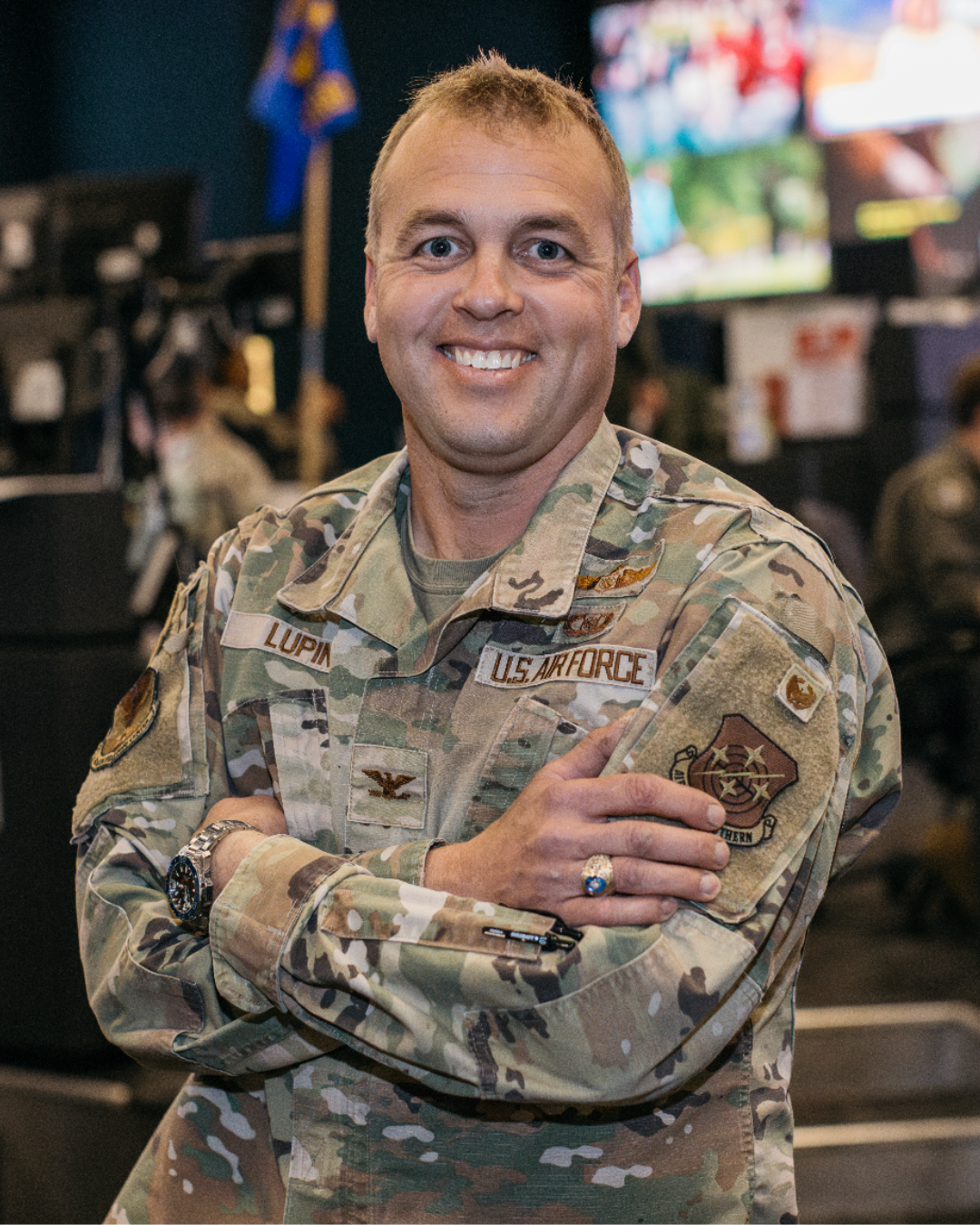
“We build the strategy, take it into executable planning, and then combat operations executes it,” Col. Lupini says. “We integrate disparate mission sets together — air refueling, fighters, ISR assets — and make it work in three-dimensional airspace over a 24-hour period.”
When the tempo spiked, Col. Lupini activated the 183rd Air Operations Group, the command’s associated Reserve unit, which sent roughly 85 people to augment the air operations center.
Liaison elements from every participating service arrived to hold the operationalto- tactical link together.
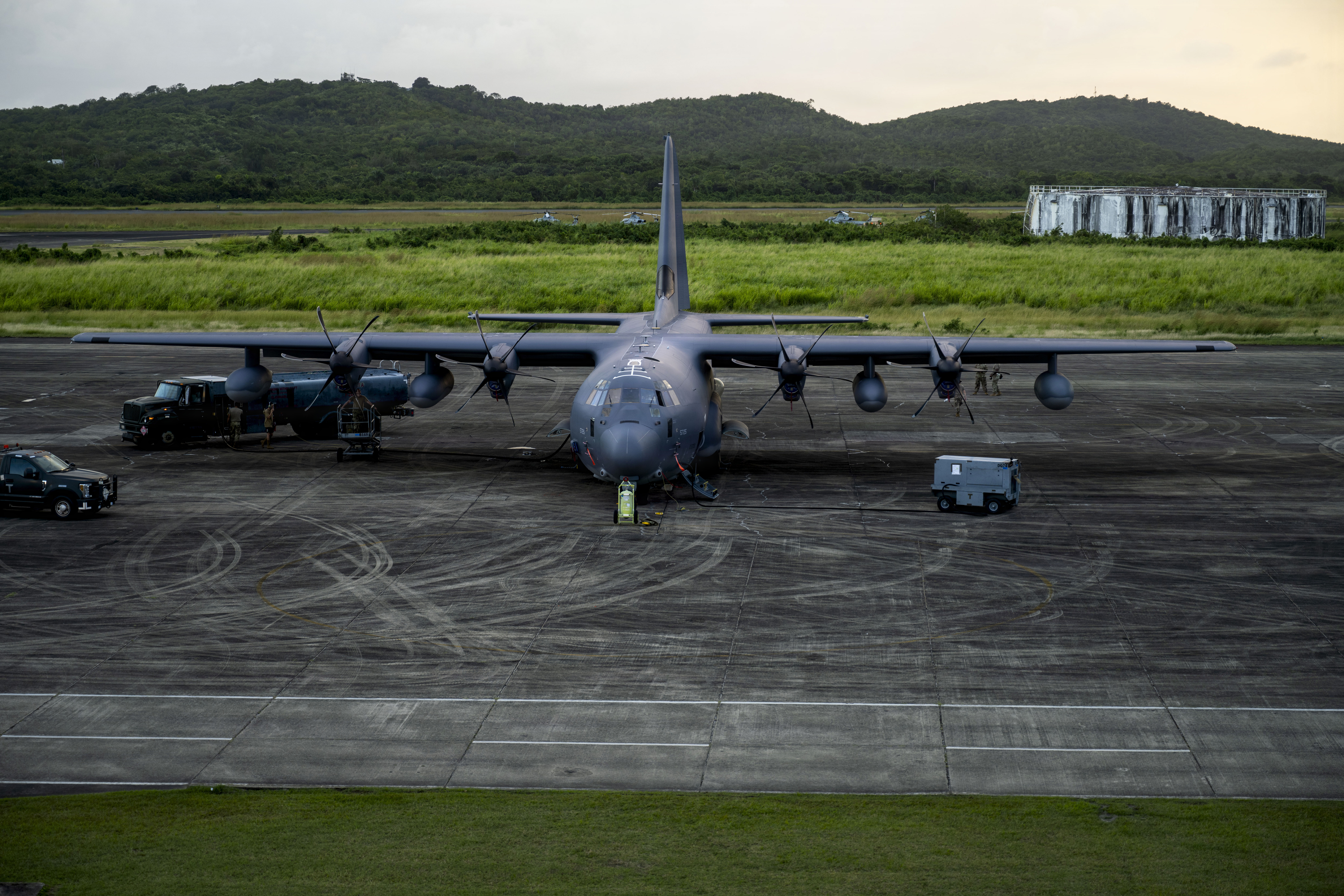
At Roosevelt Roads and elsewhere, logistics airmen stood up bases with little more than what they brought with them.
In some cases, they worked on airfields that hadn’t supported military operations in decades, clearing vegetation and restoring infrastructure under a compressed timeline.
“Hats off to the AEW,” Gen. Mineau says. “It was an incredible amount of work in a very short period of time.”
Col. Lupini is genuinely energized when talking about the work.
“It is never boring,” he says. “There’s always something new happening regionally. You never know what you’re going to get — and that’s kind of fun.”
READING THE COGNITIVE BATTLEFIELD
While pilots and planners moved aircraft, Maj. Andrew Parks ’16, AFSOUTH’s information operations team chief, was watching something else: the information environment.
“Information operations is one of the few career fields in the Air Force that actually applies what you learn in school,” Parks says.
He studied behavioral sciences and leadership at USAFA; earned his psychological operations officer qualification at the Army’s JFK Special Warfare Center at Fort Bragg, North Carolina; studied organizational psychology at the University of Cincinnati through the Air Force Institute of Technology’s Advanced Academic Degree program; and recently spent a fellowship year inside Apple’s New Product Security and Worldwide Security Design teams in Silicon Valley, California.
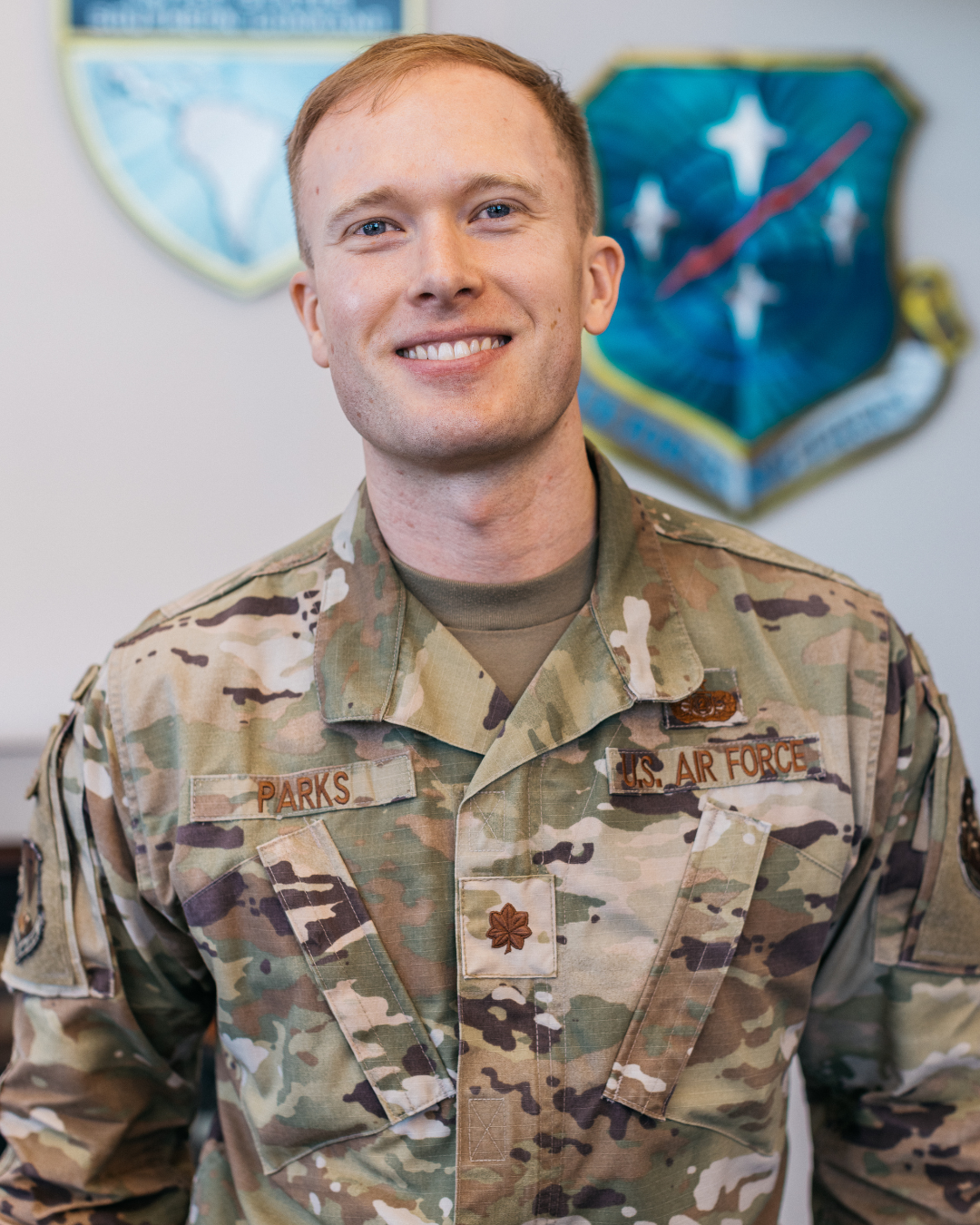
He is not a typical Air Force officer. Neither is his mission.
Gen. Jeffress understands the value of studying an adversary from the inside. As an aggressor pilot with the 64th Aggressor Squadron at Nellis Air Force Base, Nevada, his job was to become the enemy.
“Our motto is ‘Know, teach, replicate,’” Gen. Jeffress says. “We study our enemies and instruct Air Force and coalition partners on how to wage war against our nation’s adversaries. Being an aggressor gave me a Ph.D.-level understanding of our enemies’ theory of victory.”
Parks applies that same philosophy in the information domain.
“The information environment is accessible to everybody,” Parks says. “Our adversaries can see anything — even what public affairs posts.” That cuts both ways.
In the lead-up to recent operations, Parks’ team spotted something revealing about a key adversary in the information environment. Parks’ first thought was, “How can we leverage this?”
At Apple, Parks learned the importance of developing methods to protect what were called “priority surprises” — three to five things that must stay hidden to preserve the element of surprise. You build around those, and you accept the rest.
“Operation security is really about protecting the surprise,” he says. Knowing when adversaries monitor aircraft activity, which platforms they use and what patterns condition their expectations allow AFSOUTH planners to work the seams.
For Parks, the work is less about shutting information down and more about shaping what adversaries see and believe — a discipline he argues is vital to the success of joint military operations.
He wants any cadet interested in this career field to know it rewards the curious and the unconventional. “Don’t limit yourself,” Parks says. “There are so many unique opportunities in the Air Force that people don’t know about — because they never knew to ask.”
SPACE AND CYBER: A MESH NETWORK
Across a theater this size, terrestrial infrastructure simply doesn’t exist in most places. Jungle canopies swallow radio signals. Oceans stretch for thousands of miles without a repeater.
The distance from South Florida to Venezuela alone is far larger than most Americans imagine.
“We don’t have a lot of terrestrial radars down there,” Gen. Mineau says. “To have beyond-line-of-sight comms and air domain awareness across that battle space, it really took a mesh of capabilities — spacebased sensors, land-based systems, airborne relays, maritime assets. All of them together. It was resilient and took all of them.”
Last December, Space Forces Southern (SPACEFOR-SOUTH) stood up as an independent component at Davis-Monthan, formalizing what had long been an informal arrangement. The new component is small — about 15 members — but it punches well above its weight.
“Having SPACEFOR-SOUTH stood up and fully integrated into AFSOUTH operations has been a multiplier of effects for the AOR,” Col. Lupini says. “They’re in the room — making sure their effects are synchronized with the air picture. Behind the right closed doors, we’re in sync with what they’re doing.”
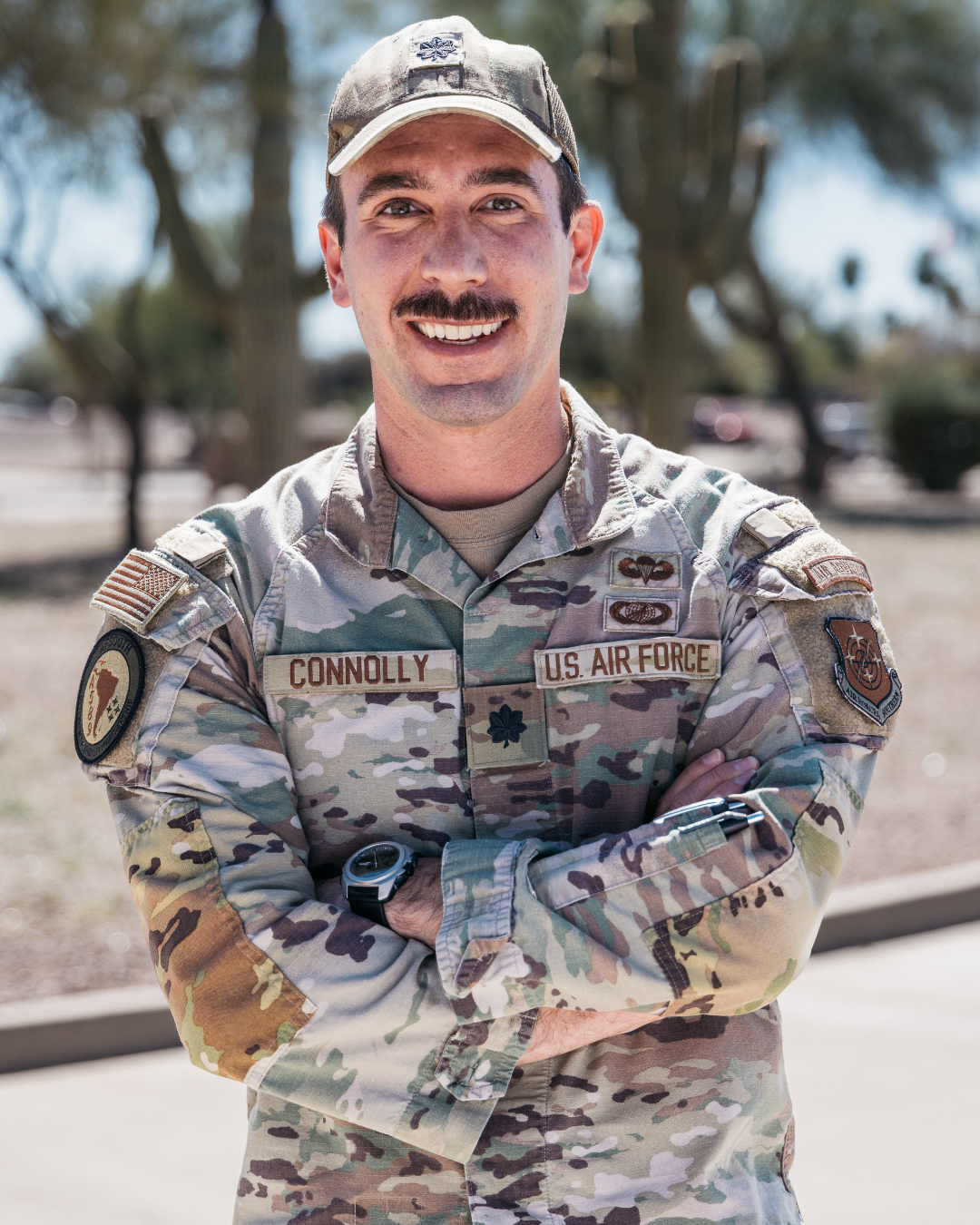
Lt. Col. Lucas Connolly ’10 came to his role as AFSOUTH’s international affairs branch chief by way of an unusual path. He started his career as a space systems program manager — first on the space-based infrared system at Los Angeles Air Force Base, California, then at RAF Menwith Hill in the United Kingdom — before pivoting to the foreign area officer career field and eventually landing at AFSOUTH.
That early background gives him a lens most officers at his level don’t yet have. “Space capabilities give you persistence,” Col. Connolly says. “Air capabilities are limited by fuel, by the endurance of the crew. Space is there all the time — always watching, always protecting. It’s no longer a luxury. It’s a need-to-have.”
He watched that play out in real time in 2024 during catastrophic flooding in southern Brazil while serving as Air Force section chief at the U.S. Embassy in Brasília.
When the consulate in southern Brazil needed to evacuate over land, Col. Connolly’s team worked with the Space Force to secure real-time overhead imagery of the flooded region.
“That imagery enabled us to create an escape route for our people,” he says, “navigating hundreds of miles north to São Paulo, avoiding flooded roads and washed-out bridges. We were also working with NASA to track where landslides were predicted. It was really cool to work across all the government agencies to solve that problem.”
On the cyber side, the challenge is protecting capabilities so sensitive that the very security measures required to safeguard them create friction inside the command.
Col. Lupini is direct about why that friction exists. “There are first-world governments that are out to get us,” he says. “Those capabilities are very niche. They are not repeatable in some cases. And if they get into the wrong hands, the consequences are severe. The protections are there on purpose.”
THE PARTNERSHIP MISSION
Even as AFSOUTH supported kinetic operations against transnational drug traffickers and assisted in planning with the Venezuela mission, the command’s quieter work — building relationships across 31 nations — never stopped.
The two missions are, in fact, inseparable.
“Counter-narcotics is the number one concern of all our partners across the hemisphere,” Col. Connolly says. “By addressing it together, we ensure the United States is the partner of choice — which means our partners don’t turn to the false promises of China or Russia.”
Col. Connolly — who speaks Portuguese and Spanish — says the three years in Brasília were the highlight of his career.
“I had this dream sheet of everything I wanted to do,” he says. “When I got to Brazil, I had to sit back and think — I need to come up with new life goals because I’d actually done the thing I really wanted to do.”
He grew up on a farm in Idaho, took Portuguese at the Academy after failing out of Chinese, and worked across every corner of U.S. foreign policy from inside the embassy in Brasília. None of it was visible from the Terrazzo.
Col. Connolly watched China work to build influence across the hemisphere and came away more confident than concerned.
“When I’d take distinguished visitors to the embassy, I’d show them the line of Brazilians waiting to get visas to come to the United States,” he says. “Then I’d point across the street at the Russian Embassy, where maybe the ambassador’s car was the only one in the parking lot.
“When you turn on the radio in Latin America, they’re not listening to Chinese opera. They’re listening to Bad Bunny and Taylor Swift. We have a natural advantage. The challenge isn’t being better than Russia or China. We already are. It’s delivering on the timelines our partners need.”
1st Lt. Amir Walker, who interned at the Inter-American Defense Board before coming to Davis-Monthan, learned a similar lesson working alongside Brazilian, Peruvian, and Mexican officers in Washington, D.C.
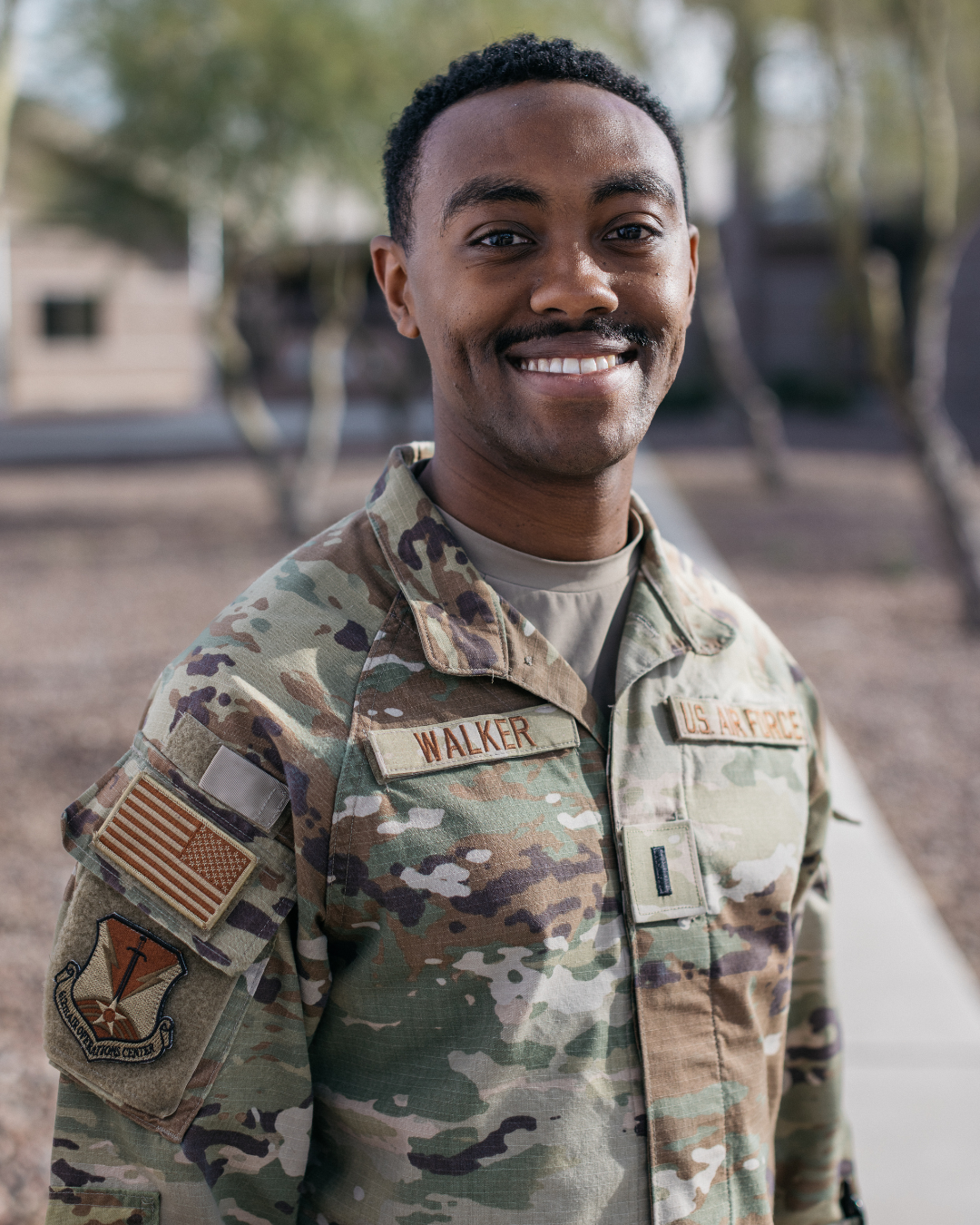
Every one of them, regardless of country or branch, said essentially the same thing.
“The work this place does is important,” Walker says, paraphrasing what they told him. “But what’s really more important are these relationships we’re building and how we can leverage them in the future. Security cooperation isn’t transactional. It’s about genuine relationship building.”
Gen. Jeffress distills the whole enterprise into two sentences. “It starts with a conversation,” he says. “We just have to listen to our partners.”
That understanding shaped how AFSOUTH supported Operation Absolute Resolve. Partner nations granted the access, basing and overflight rights that made the 150-aircraft operation possible.
“Having those relationships, which gave us the ability to land aircraft, refuel and pre-position personnel,” Col. Connolly says, “was essential to the success of that operation. It was enabled by the partners that helped us get there."
PEOPLE DRIVE THE MISSION
Not every mission at AFSOUTH involves aircraft or intelligence feeds. Some of it is making sure a deployed airman doesn’t miss the birth of his child.
Second Lt. Nevaeh Mitchell ’24 makes sure those questions get answered. Assigned to AFSOUTH’s A1 — the manpower, personnel and services directorate — she arrived from the Academy, where she studied biology before discovering that force support was where she wanted to be.
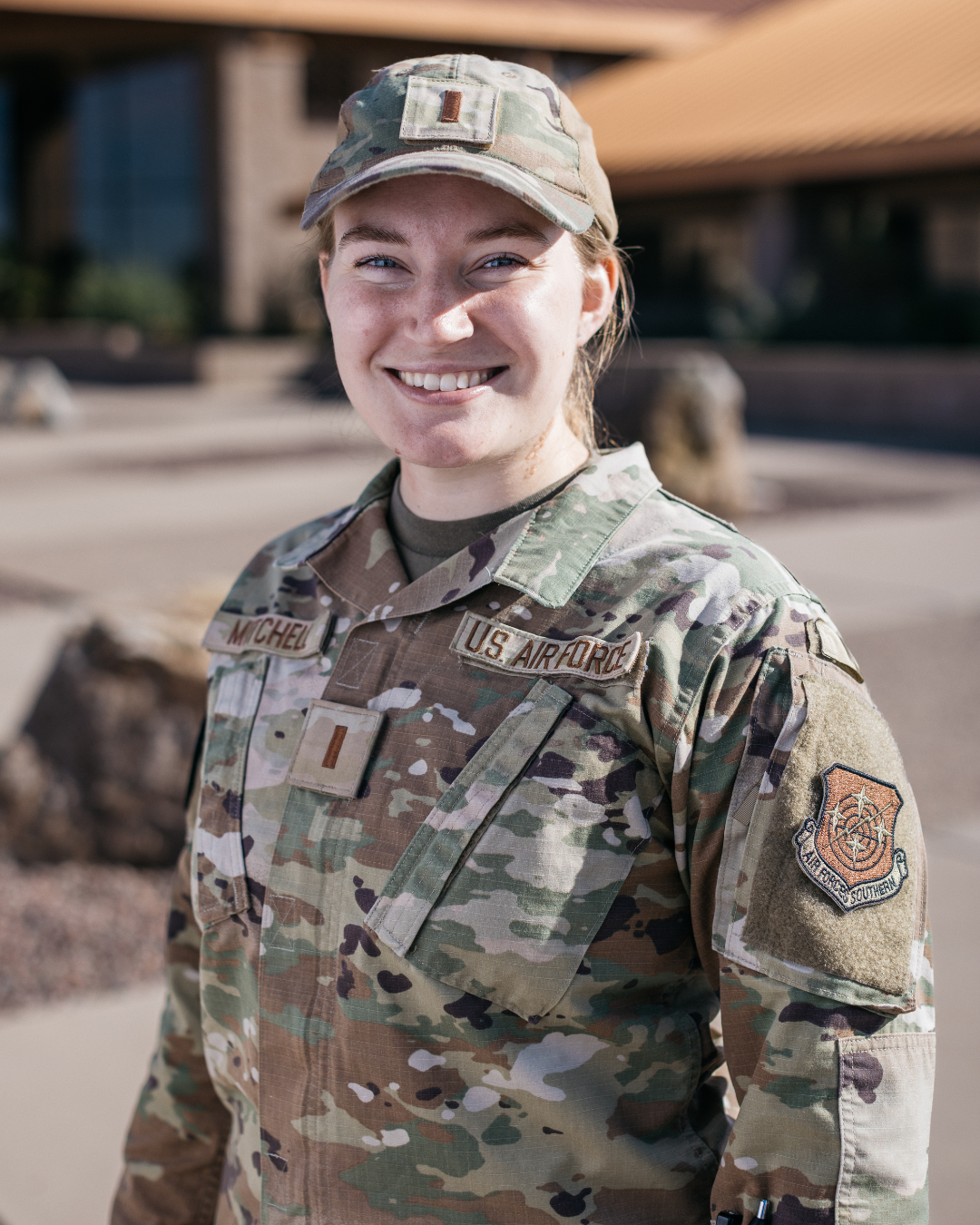
At Davis-Monthan, she also serves as a readiness and crisis action team augmentee, attending meetings on behalf of her director and filtering what’s relevant back up the chain.
“People drive the mission,” Mitchell says. “When there are all these moving parts — all these assets — someone has to make sure the people in charge of those assets are being taken care of. That’s a majority of what we do.”
The joint environment demanded something she didn’t fully anticipate: precision in language. At her previous assignment in Columbus, Mississippi, everyone spoke the same institutional vocabulary. At AFSOUTH, she sits in rooms with Navy, Army and coalition counterparts who don’t share that shorthand.
“You can’t just say, ‘Oh yeah, you get it, right?’” Mitchell says. “You have to be very deliberate. If there’s a miscommunication at this level, it can lead to pretty drastic trickle-down effects. Maybe the meetings go on a little longer than I’d like — but it’s incredibly important that the Navy entity understands what’s happening on the Air Force side and vice versa.”
She credits the Academy with one specific skill she draws on daily. It isn’t what she expected. “It’s not time management,” she says. “It’s task management. I’m not going to get to every single task every single day. It’s about completing the most important thing first. That sounds a lot like the Academy.”
THE VALUE OF A DIFFERENT LENS
Lt. Col. Rachael Richards ’08 wasn’t supposed to command the 612th Theater Operations Group.
A reservist assigned to the 944th Fighter Wing at Luke Air Force Base, Arizona, she came to Davis-Monthan to fill a deputy commander slot.
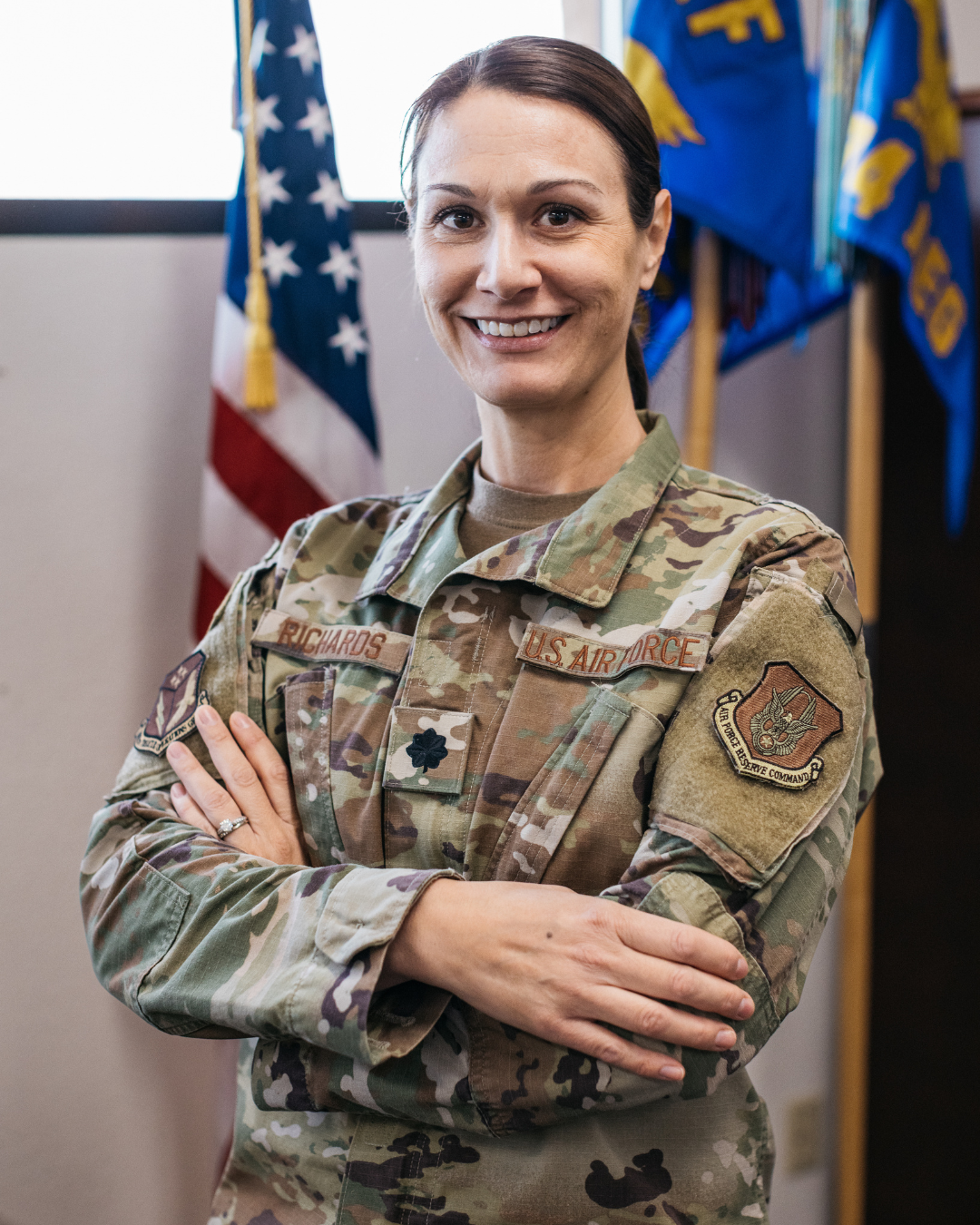
When the acting commander requested early retirement, the phone rang. “I got the call from the chief of staff asking if I would fill in,” Col. Richards says. “I said, ‘Yes, sir.’”
The theater operations group is AFSOUTH’s permanent forward presence — teams at Soto Cano Air Base in Honduras, Bogotá, Curação and Guantánamo Bay, and supplemented by rotational detachments. When operations surged last fall, those locations had to keep running even as the headquarters at Davis-Monthan went into sprint mode.
Col. Richards brought something useful from years of alternating between active duty and Reserve service: she had learned to slow down when the mission allows it.
“When I first left active duty and went into the Reserve, it was very apparent that I was still thinking active duty — here’s a problem, we’ve got to do this, this, this, this, this,” she says. “And they were like, ‘Whoa, take a breath. We’ll figure it out.’”
That shift in tempo, she says, taught her to take in all the information, sit with a decision, and then act — a discipline that has made her a better commander than pure urgency ever could.
She also arrived as a logistician, with a deep background in fuels, vehicle operations and transportation. Commanding a theater operations group that includes flying operations she'd never managed directly was a new challenge.
“In the logistics community, we grow up hearing we’re a jack of all trades but master of none,” Col. Richards says. “The flying operations piece wasn’t something I could pull from my background. But the A3 team was there. That cross talk was invaluable.”
Her message to every grad deciding between paths is simple. “There is not one path,” Col. Richards says. “Don’t think that there is. Keep the doors open. This command was not in my career plan. But the opportunity presented itself, and I’m glad it did.”
WHAT CADETS NEED TO UNDERSTAND
Gen. Mineau often thinks about the next generation of Air Force leaders. He wants cadets to appreciate something most Americans — and many officers — rarely stop to consider.
“We have taken for granted our geographic location — that we are protected by oceans on all sides,” Gen. Mineau says. “That’s under stress right now, from both conventional competitors and the asymmetric threat coming up from the rest of the Western Hemisphere.”
Col. Connolly adds one piece of practical advice for any cadet drawn to this part of the world: Take language classes. Take every one of them you can get.
For Walker, the message is simpler still. He came to AFSOUTH with a Georgetown master’s degree in Latin American Studies, a semester at the Brazilian Air Force Academy, language certifications in Spanish and Portuguese, and an internship at the Inter-American Defense Board.
He assembled all of it without knowing exactly where it would lead.
“One of the beautiful things about life,” Walker says, “is that you can set yourself up for things you didn’t even know existed — or things you didn’t even know you wanted. I set myself up to come here. I just didn’t know that’s what I was doing.”
Gen. Jeffress keeps his advice for the next generation succinct.
“Master your craft,” he says. “Be ready. Provide solutions. You represent your nation and your service every day.”
Gen. Mineau, who followed his own father and brother to the Academy before building a career across six airframes and three decades of service, understands that instinct. He just sees it on a larger scale now.
“There is no other region of the world more similar to the United States than the Americas,” he says. “The common interests we share, and the common threats we now face, should really bring us together.
“We need to think about our hemisphere more than we have in the past.”